a clock you can feel
Working with the Moon
The Moon does not run your life. She does not pull your blood the way she pulls the sea, whatever the internet tells you, your body is too small and the water too far. What she gives you instead is a clock you can read from the yard, a slow hand that swings dark to full and back in a little under a month, every month, no app, no battery. And a clock you can feel turns out to be worth something. Not because the night decides anything for you, but because a shared cadence gives a stretch of days a shape, a beginning, a middle, an end. You can hang your own wanting on that shape. Plant something near the new moon and go check on it when she's full, and the checking is the whole point. None of this is fate. It's just a way to pay attention, slow, by hand, tonight if you like.
The Dark of the Moon, When You Plant
There's a night, once a month, when she's gone. No sliver, no glow, the sky just dark and the stars closer than usual. Gardeners used to sow root crops near here, and there's an honesty in that, you're putting something down where you can't see it yet.
This is the night for naming, not for doing. Sit with a candle and one question, what do you actually want this month. Not the year, not the life, the month. Keep it small enough to hold in one hand. Write it down, plain, the way you'd write a grocery list. What you put down in the dark isn't a wish flung at the sky and it isn't a promise the night owes back. It's a seed you bury so you'll remember where you put it.
What you write in the dark, you read again when she's full. That's the whole machine. Naming, then seeing.
Don't promise yourself the harvest. Just put the seed down.
Waxing, the Long Build
After the dark she comes back thin and grows nightly, a little more lit each evening for two weeks. This is the part of the month that asks for hands. Whatever you named, this is when you do the unglamorous middle of it, the watering, the showing up, the small ugly steps nobody photographs.
The waxing moon is good company for that because she's visibly doing the same thing, adding a sliver a night, no leaps. You can look up after dinner and see her a touch fuller than yesterday and let that be the only progress report you need. Some nights you'll do almost nothing toward your thing and she'll grow without you anyway. Let that be permission, not guilt. Build when you can build. She isn't keeping score, and you don't have to either.
Full, When You Stand in It and Look
Then she's whole, the brightest the month gets, casting shadows on the lawn at midnight. This is the honoring, and it's also the seeing.
Go back to what you wrote in the dark and read it in this light. Sometimes you'll find you grew the thing without noticing, and the full moon is just a porch to stand on and say, look at that, I did some of it. Sometimes you'll read your own handwriting and feel a small cold drop, because you wanted that two weeks ago and you don't anymore, or you wanted it and did nothing, or it turned out to be somebody else's want wearing your voice. All of that is good information. The moon doesn't grade you. She turns the lights on so you can see what's in the room, and the rest is yours to do something with.
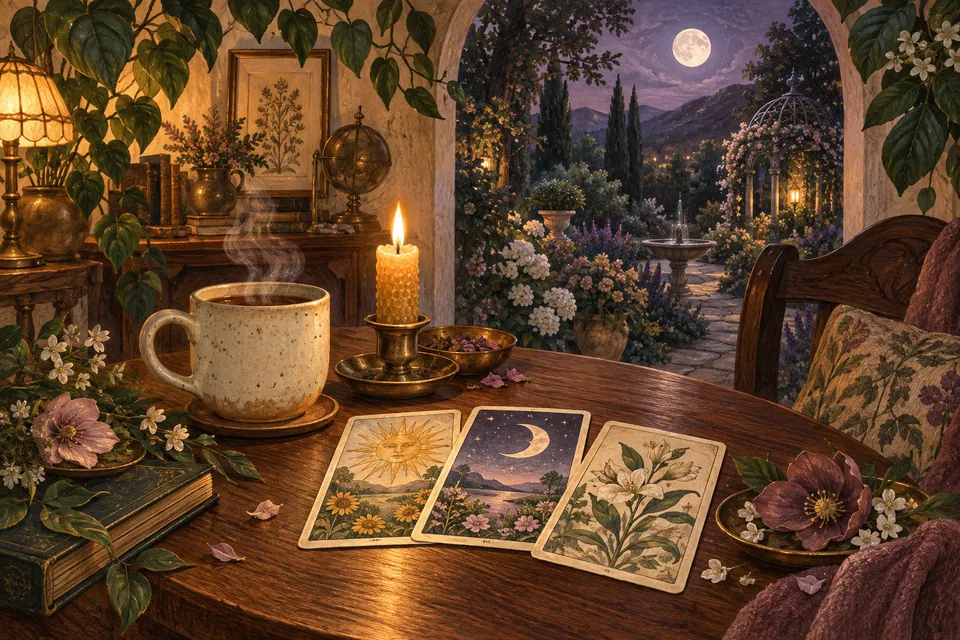
This is the night for the cards too, if you keep them. Draw one for the thing you named and ask it plainly, where is this, really. The card won't tell you what happens next. It'll show you the present clearly enough that you can decide. Then sit with what your chest does when you read the answer.
Waning, and the Long Letting Go
For the next two weeks she shrinks back toward dark, a little less every night, and this is the half of the month almost nobody works with, which is a shame, because putting down is half of everything.
Waning is for setting things on the ground. The intention that turned out hollow, you can release it now without drama, you named it, you saw it, it's done. So can the resentment you've been hauling, the half-finished thing you've decided isn't yours, the apology you keep rehearsing in the dark. You don't have to burn anything or write a ritual. You can simply decide, out loud, on a shrinking-moon night, that you're setting it down, and let the deciding be the act. Then the last few nights before she's gone again, rest. Actually rest. The seed for next month wants a quiet bed to land in.
Tying It to Your Dreams
If you want one more thread, hang your dreaming on the same clock. On the new moon, before you sleep, hold your written intention and ask the night to show you something about it. This is dream incubation, old as the temples, and it works the way the cards work, not by sending down an answer but by aiming your own sleeping mind at the question. Keep a notebook by the bed. Whatever comes, write it down before your feet touch the floor, even the nonsense, especially the nonsense. By the full moon you'll have two weeks of scraps to read alongside your waking progress. The dreams are a shape your own mind made, nothing more, nothing less, and what you do with them stays yours.
None of this is required, and the moon keeps her schedule whether you watch or not. But a month is a long time to wander without edges, and she gives you four of them for free, every cycle, from any window. Name something in the dark. Build it while she fills. Stand in the full light and tell yourself the truth about it. Then put down what's done, and rest. Tomorrow night she'll be a little different. So will you.