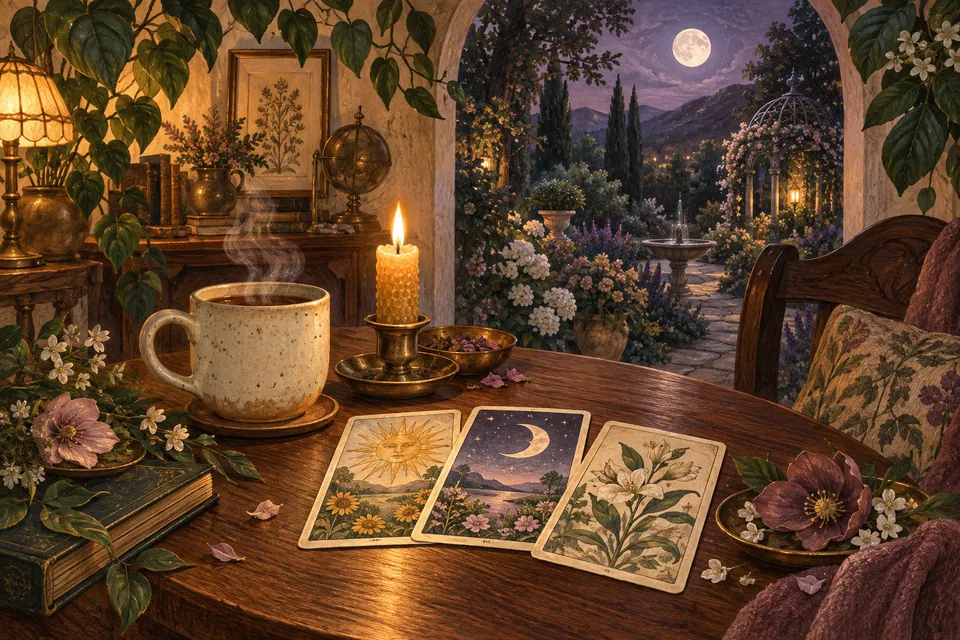
reading your own symbols
The Language of Dreams
A dream doesn't talk the way you talk in daylight. It doesn't argue, it doesn't explain, it hands you an image and walks off. A tooth in your palm. A house with a room you never knew was there. Water rising in a kitchen that isn't yours. The mind, asleep, stops using sentences and starts using pictures, and the pictures are doing real work, sorting the day, turning a feeling over, saying something you already half know in a language you forgot you spoke. You wake with the taste of it still on you and you reach for meaning, and that reaching is good. Just know there are two doors into it, and the first one, the one almost everybody walks past, has your own name on it. Nothing here tells you what will happen. A dream is the day talking to itself, and you are the only one in the room who can answer.
Two Kinds of Symbol
There are images that mean something close to the same thing in nearly every life, and images that mean something only in yours. The first kind is shared. Teeth, falling, water, being chased, a door, the dead come back to the table. These run deep, they show up across cultures and centuries, and a good dream library can tell you the old shapes they tend to hold. That is honest knowledge and worth having.
But the second kind is louder, and it's the kind a dictionary will always miss. A dog in your dream is not a dog in mine. If you grew up with a black dog that slept at the foot of your bed and died the spring you turned eleven, then a black dog in your dream is grief and warmth and home all at once, no matter what any book says about loyalty or instinct. The dream borrowed your dog because your dog already carries that weight. The private meaning beats the universal one, every single time. Start there.
Your Own Dictionary First
So before you look anything up, ask the dream a plain question. What does this thing mean to me. Not to people in general. To you. Say the image out loud, a snake, a kitchen, my old apartment, and then say the first three things that come, fast, before the tidy answer arrives. The fast ones are the true ones.
A symbol is a door, and you are the only one who knows what's behind it. The dream knows your house better than any stranger could.
Most dreams are not drawing from the great shared well. They're drawing from your week. The river is the conversation you keep not having. The locked room is the part of the job you've stopped looking at. The dream takes whatever's nearest and most charged and dresses the feeling in it, and the dressing is personal, pulled from your own closet.
The Two Old Traditions
There are two old ways of reading a dream, and they don't cancel each other out. They're two hands on the same cup.
The first comes down from Artemidorus, a dream reader of the ancient world who held that you cannot read a dream without knowing the dreamer. The same image means different things to a sailor and a farmer, to the rich man and the one in debt. Read by the life. Who are you, what's pressing on you right now, what would this picture mean given the exact shape of your days. That is the outer door, the practical one, rooted in your waking life.
The second comes from Jung, who read dreams as the voice of the part of you that doesn't get the floor in daylight. The unconscious, he called it. He watched for the old recurring figures, the wise one, the trickster, the shadow, the part of yourself you've disowned and so keep meeting as a stranger in the dark, often someone you fear or can't stand. When a figure unsettles you, Jung's question is gentle and hard at once. What if that's a piece of you, asking to come back in.
Working a Dream in Daylight
Here is something you can do tomorrow morning, while the dream is still warm. Keep paper by the bed and write before you're fully up, because the dream goes thin fast, like frost off a windshield. Don't write it pretty, write it true, present tense. I am walking. The water is rising. Then leave it an hour.
Come back with coffee and do three small passes. First, circle the images that have a charge, the ones your chest tightens at. Second, for each one, your own meaning before any book, what does this carry for me. Third, only then, look up the shared shapes if you want them. The site keeps a dream symbol library for exactly that, the old common meanings laid out plain. Hold the library loosely. It's a second opinion, not a verdict. The dream is a shape for your own thinking, and what you do with the thinking stays yours.
You won't catch every dream, and you don't need to. Some are just the day folding its laundry. But the ones that follow you to the sink, the ones still in your mouth at noon, those are worth the paper. Write it down, ask what it means to you first, and let the dream do what it came to do, which is hand you back something you already knew, in an image you won't forget.